
Fresh Beef Cat Food
High protein = 100% human-quality beef
Cats are carnivores, and they need real meat to thrive. But most ‘beef’ cat food is actually packed with grains, sugar and fillers, with much less meat than you'd expect – sometimes as little as 4%.
Benefits of beef cat food

Protein for healthy muscles. Beef provides essential amino acids that help cats maintain muscle and stay active.
Healthy skin and coat. Beef contains fats and nutrients that support skin and coat health.
Supports digestion. Our fresh beef recipe contains no grains or unnecessary fillers that cats struggle to digest.
Complete nutrition. Every recipe is vet-formulated to provide the nutrients cats need.
A different protein option. Beef may suit cats who don't get on with certain other meats, although it isn't suitable for every cat with food sensitivities.
Beef is rich in protein and packed with the nutrients cats need. But not all beef cat food contains much actual beef. Some recipes rely heavily on grains, starches and other fillers.
Our grain-free cat food is made with fresh meat, gently cooked at 90°C in our Suffolk kitchen. Here's what beef brings to the bowl:
Beef is also one of the richest natural sources of taurine (especially in cuts like heart), an amino acid cats can't make enough of on their own and need from their food. It's exactly why real high protein cat food matters so much for carnivore cats.
Katkin’s fresh beef cat food

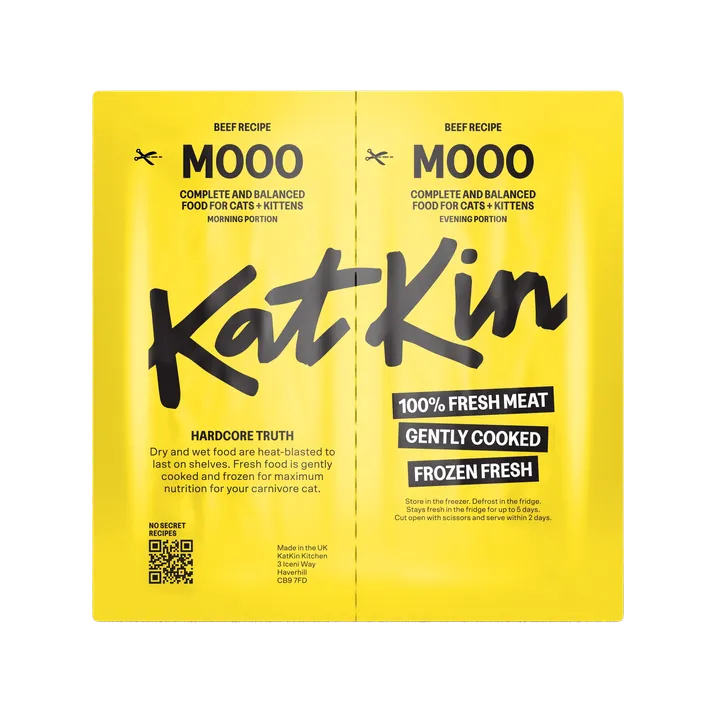
Our beef recipe, Mooo, is made with beef trim, heart and liver. It's gently cooked at 90°C, then flash-frozen to lock in nutrients and flavour.
Per 100g, Mooo contains:
157 calories
17.2% protein
10.2% fat
We calculate portions based on your cat's age, weight and activity level, then deliver their meals frozen to your door. Just defrost in the fridge and serve.

Choosing the best beef cat food for your feline friend
Start with the ingredients list. Look for named cuts of beef and organs such as heart and liver, rather than vague descriptions like ‘meat and animal derivatives’. Check how much beef the recipe actually contains, too.
Terms like ‘natural’, ‘organic’ and ‘grass-fed’ don't necessarily tell you anything about a food's meat content or nutritional balance. The ingredients and nutritional information are more useful.
Homemade beef diets are another option, but getting the right balance of vitamins, minerals and taurine can be difficult without expert guidance. Our Mooo recipe is formulated by vets to provide complete nutrition – everything your cat needs.
For other proteins, including chicken, lamb and duck, browse our full product range.
A Gently Cooked Alternative to Raw Beef Cat Food

Raw beef diets are popular with cat parents looking for less processed, meat-rich food. But raw meat can carry bacteria and parasites, including Toxoplasma, which can pose risks to cats and people handling their food.
Raw diets also need careful nutritional balancing as meat alone won't necessarily provide everything a cat needs.
Here at KatKin, we gently cook our beef recipe at 90°C using a controlled cooking process to reduce harmful pathogens while retaining nutritional value. It's made with fresh meat, but doesn't carry the same food-safety risks associated with feeding raw beef.
Beef food for kittens

Kittens can eat beef too, as long as the recipe is formulated for their extra nutritional needs. Growing kittens need more protein and calories relative to their size – and beef's naturally high protein content, along with taurine from cuts like heart, supports healthy growth from an early age.
KatKin's recipes are formulated by our in-house vet nutritionist team to suit both cats and kittens, so there's no need for a separate kitten-only food as your cat grows.
Fresh vs wet & dry beef cat food
Wet beef cat food is usually cooked at high temperatures for a long shelf life. Meat content varies, and some recipes contain added starches, thickeners or other ingredients.
Dry beef cat food contains very little moisture and generally relies on starch to hold the kibble together.
Fresh beef cat food uses real cuts of meat, gently cooked and frozen to keep it fresh.
Check the ingredients rather than relying on the word ‘beef’ on the packaging.
Beef vs other proteins

Beef is one of KatKin's richer recipes, with 10.2% fat and 157 calories per 100g. Leaner options, such as turkey, may be more suitable for cats that need a lower-fat diet.
Mooo is also made without chicken, making it an option for cats avoiding poultry. However, beef itself can trigger food allergies, so speak to your vet if your cat has a suspected sensitivity.
Compare the nutritional values and ingredients across our full cat food range to find the right recipe for your cat.
Transitioning Your Cat to Beef-Based Food

Even a positive change, like switching to fresh, is still a change and most cats prefer to ease into new food gradually. We’d recommend incorporating these helpful tips into your cat’s feeding routine:
Start small. Mix a little of Mooo into their current food – roughly a quarter to three-quarters old food at the start
Increase gradually. Every two to three days, shift the ratio further towards beef, watching how they respond.
Watch the basics. Keep an eye on appetite, stools and energy levels as the balance changes.
Give it time. Most cats adjust within seven to ten days, though fussier cats may take a little longer.
Ask for help if needed. If your cat has allergies, a health condition or simply won't budge, a chat with your vet or KatKin's in-house Cat Experts can help smooth things along.
The difference real meat, high protein cat food makes
A far more natural diet
As a parent I'm happy. As a carnivore she's asking why I didn't get this stuff in earlier.
Elaine and Marley

I want the best – that’s KatKin
100% meat with no sugars and fillers – what's not to like? I want the best for my boys and that's KatKin.
Mandy and Willow
She finally enjoys her meals
We were at our wits’ end about Beau’s fussy eating habits. Now she meows for her meals and licks the bowl.
Siobhan and Beau
The best cat food ever
He is livelier, looks healthier, his fur is better. I can’t believe the difference. 100% fresh cooked meat and he loves it.
Melissa and Charlie

If I could give 10 stars
Delivered promptly and in recyclable packaging, all fresh, no nasty fillers. Bubba never leaves any.
Jacqui and Bubba
He’s like a different cat
His fur is thick and shiny. The Sprinkles and Nibbles have to be put away or he tries to open them himself.
Mrs J.H. and Tyler
